The House Appropriations Committee provides financial support for public health through the Virginia Department of Health (VDH) which administers a broad array of public health programs
These programs include:
| Community Health Services | Emergency Preparedness and Response |
| Communicable Disease Prevention and Control | Emergency Medical Services |
| Environmental Health Hazards Protection | Medical Examiners and Anatomical Services |
| Drinking Water Protection | Preventive Health Services |
| Vital Records and Health Statistics | Licensure and Certification |
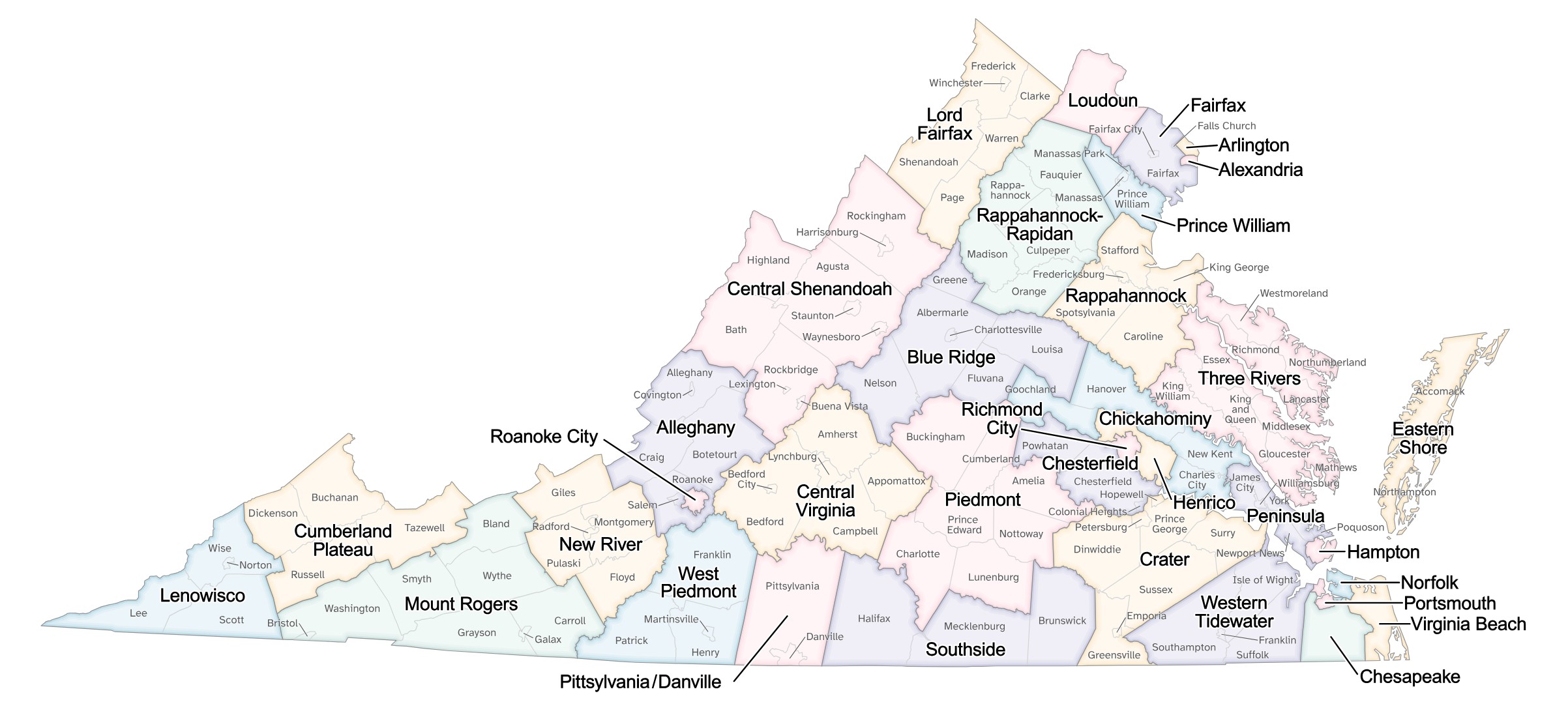
Many of these key programs and services are managed through Virginia’s 35 health districts and 182 local health departments and satellite offices. Local health departments promote and protect the health of local communities and people through services such as immunizations, infectious and chronic disease prevention, maternal health, emergency preparedness, and food safety inspections.
Budget Overview
Public health funding represents a partnership with the federal, state and local governments. Public health programs may generate funds through the collection of special or dedicated special revenue. For example, local health clinic services may receive revenue by billing other private and public sources for patient services. Other inspection and licensure programs may receive revenue from fees from regulated entities like hospitals, nursing facilities, community waterworks, restaurants, etc.

Program/Policy Highlights
- Community Health Services
Includes immunizations, infectious and chronic disease prevention, maternal and children health services, nutrition services through the Women, Infant, and Children (WIC) program, emergency preparedness, environmental health services, food safety inspections, injury and violence prevention services, and tobacco control
Services offered in 182 local health departments and satellite offices which employ 3,702 people
- Communicable Disease Prevention and Control
Provides treatment and Control of TB, STD and other communicable diseases
Conducts more than 365 disease outbreak investigations annually (not including COVID-19 outbreak)
Investigates environmental epidemiology of zoonotic diseases (e.g., rabies), toxicology, vector-borne diseases (e.g., Lyme disease) and water hazards
- Environmental Health Hazards Protection
Inspects restaurants, wells and septic tanks, shellfish sanitation levels and provides marina services
- Water Quality Oversight
Regulates 2,870 public water systems throughout Virginia
Provides over $75 million per year in loans and grants for water system infrastructure improvements through the federal Drinking Water State Revolving Loan Fund and other programs
Provides oversight and project management to over 50 construction projects per year
Completes more than 750 surveys annually to identify water pollution, prioritize water testing and predict recreational water quality and evaluates over 110,000 water samples per year
- Vital Records and Health Statistics
Records and maintains information related to significant life events, including, but not limited to, births, deaths, marriages, and divorces that take place in the Commonwealth
- Emergency Preparedness and Response
Facilitate response to any emergency impacting public health, such as infectious disease outbreaks (e.g. H1N1 and COVID-19, and bioterrorism). Response activities can include surveillance, mitigation, planning and coordination across communities, medical surges, and vaccination
- Emergency Medical Services
Plans and coordinates statewide EMS system
Trains and certifies emergency responders
Administers and provides financial assistance to emergency medical service providers and localities
- Medical Examiners and Anatomical Services
Conducts death investigations under certain circumstances, through 4 district offices with 100 staff statewide
Issues autopsy reports and death certificates
Manages the statewide anatomical program
Accredited by the National Association of Medical Examiners
- Family Health Services
State administration and oversight of health eating programs (WIC), child and family health programs, early hearing detection and intervention in infants, collecting public information and data on population health to support and improve public health programs
- Licensure and Certification
Licenses and certifies 5,764 nursing facilities, hospitals, home health agencies, hospice, End Stage Renal Disease facilities, outpatient surgery centers, labs, other outpatient facilities (rural health, psychiatric)
Reports and Presentations
Resources and Deep Dives
Staff Contact
